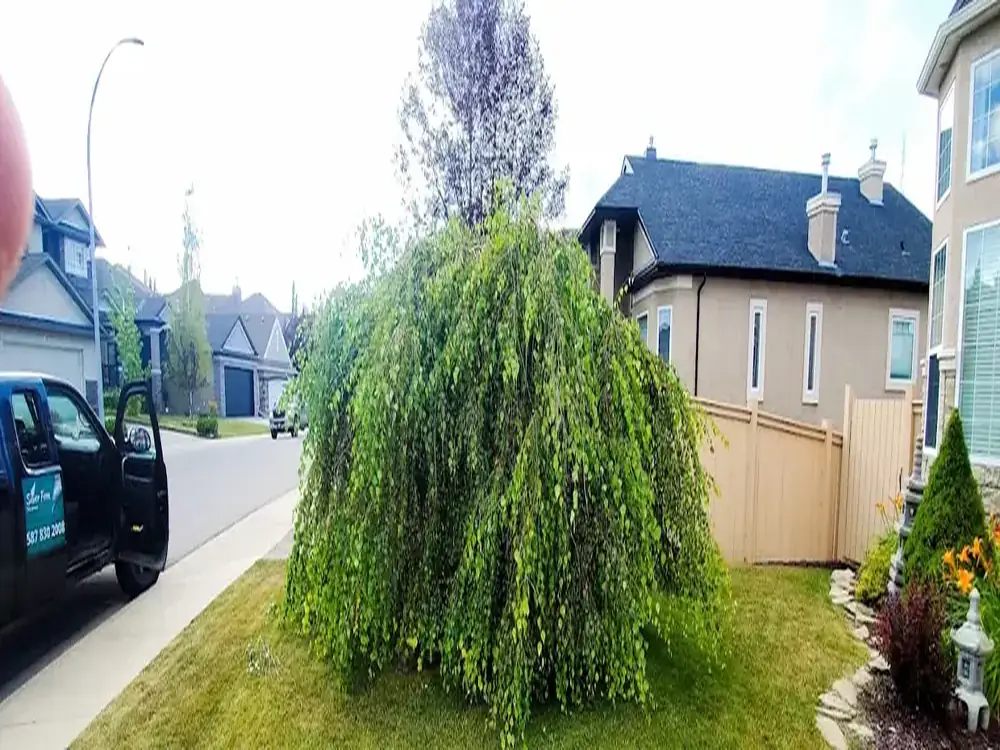
When a tree has outgrown its space, a crown reduction brings its height and spread back without topping it, so it keeps its shape and stays healthy.
Free estimates from an ISA certified arborist. No obligation.
A crown reduction shortens the longest branches back to healthy side branches, rather than cutting through the main stems. The tree ends up smaller and lighter, with a natural outline and far less of the weak regrowth that topping causes.
It is often the answer when a tree is too tall for its spot, shades a garden, grows into a roof or a neighbouring yard, or has become heavy on one side. It can also be the difference between keeping a tree and removing it.
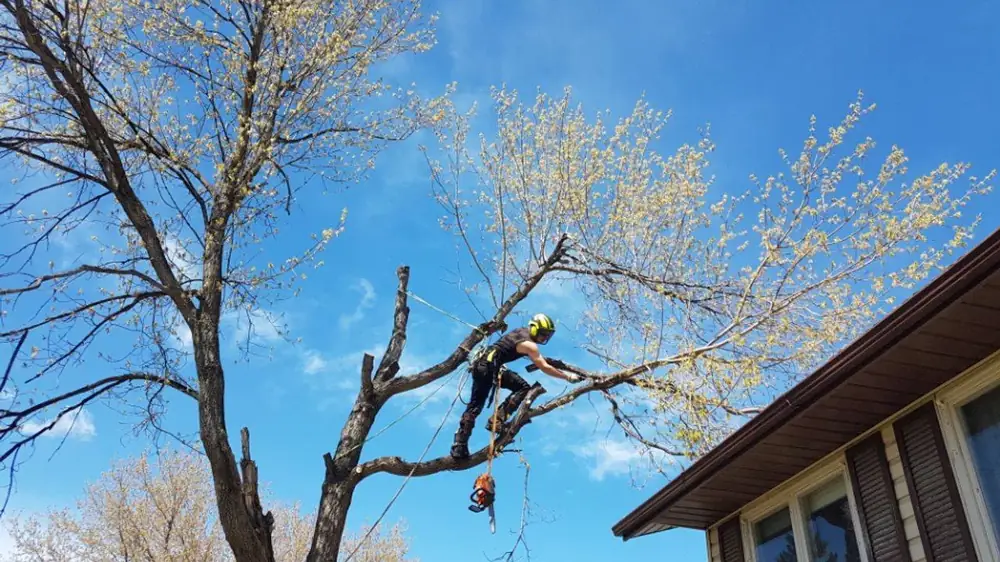
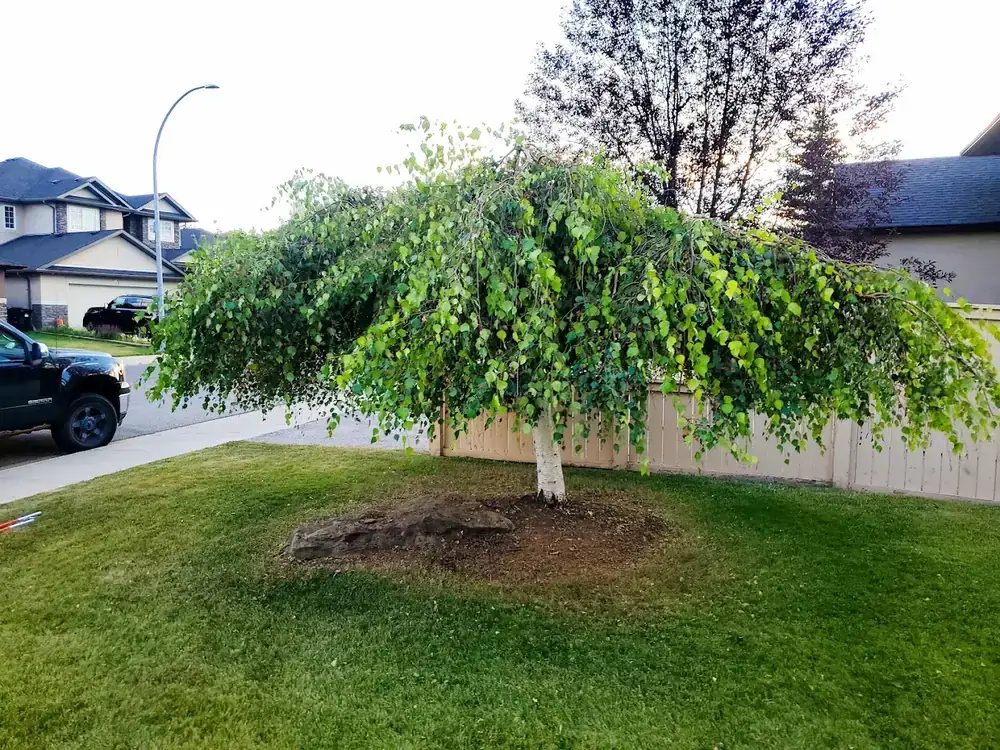
Marek's own photos from the job, same yard and same angle.


Today they provided the service, kept me informed of what they were doing, made a few suggestions going forward with the trees on my property. You are getting a Professional Arborist who really knows his profession. Cleanup was efficient and immaculate. Very thrilled with this Company.
Betty Macdonald-Gray · Google review
Just had Silver Fern over to help me with an unruly Aspen. I can’t say enough. Very knowledgeable, friendly and very good pricing. I highly recommend. You can’t go wrong with this service!!
Heather Twan · Google review
A crown reduction lowers the height or spread of a tree by cutting branches back to healthy side branches. Unlike topping, which cuts the main stems to stubs, it keeps the natural shape of the tree and limits decay and weak regrowth. It is done by climbing the tree and working through the crown.
As a general rule no more than about a quarter of the living crown should come off in one season, and often less on older or stressed trees. Taking too much at once starves the tree and invites decay. Marek will tell you how far your tree can be reduced safely and whether it needs staging.
If the tree is healthy and structurally sound, often yes. Reduction keeps the shade, privacy and value a mature tree gives your property while solving the size problem. If the tree is dead, badly decayed or unsafe, removal is the honest recommendation, and you will be told which it is before anything is cut.
Call or text, or send the form at the top of the page. Estimates are free with no obligation.